A hard freeze can arrive fast on Glen Lake, and ice can do thousands in damage before the holidays even start. If you own a lakefront home in Glen Arbor, you know the season can turn quickly. This guide gives you a simple, local checklist to protect plumbing, docks and lifts, shoreline, and smart systems so you avoid surprises and open next spring with confidence. Let’s dive in.
When to winterize on Glen Lake
Plan to finish exterior and dock work by October to early November. Glen Lake’s ice forms and shifts at different times each year, and ice expansion can push on docks, lifts, and shore structures. Check the week-by-week outlook from the National Weather Service Gaylord office for the most current freeze and storm guidance.
Your seasonal timeline
- Late summer to September: Service HVAC and generator, inspect roof and gutters, book dock and plumbing vendors, test smart sensors and backup internet or cellular.
- Early to mid October: Winterize irrigation and exterior spigots, pump septic if due, remove boats and schedule dock or lift removal, set heat plan.
- Late October to early November: Complete plumbing blowouts if closing the house, disconnect dock and lift power, finish shoreline touch-ups and erosion control, confirm caretaker access.
Plumbing and water systems
Completing plumbing tasks before sustained freezing is the single best way to avoid burst pipes.
- Shut off and drain exterior hose bibs. Remove hoses. If possible, install frost-free sillcocks.
- Irrigation: Blow out lines and backflow preventers. A licensed contractor can prevent over-pressurizing.
- Interior: Insulate exposed pipes and cold areas. Open cabinet doors on exterior walls to circulate warm air.
- Heat plan: Either fully winterize the home or keep heat at 50 to 55°F with periodic checks. Smart thermostats can send alerts if temperatures drop.
- Water heater: Drain or set to vacation mode per the manufacturer. If electricity will be off, follow the manual to protect elements and tanks.
- Antifreeze: Use only non-toxic RV/plumbing antifreeze (propylene glycol) in traps and low points. Do not use automotive antifreeze.
For step-by-step seasonal-home plumbing tips, see MSU Extension seasonal home and septic guidance.
Wells and septic systems
- Wells: Insulate any exposed lines and protect the wellhead. If shutting down power, consult your well contractor about draining pressure tanks and protecting pumps.
- Septic: If pumping is due, complete it before winter. Keep normal snow cover over the drainfield for insulation and avoid heavy compaction.
- Occupied in winter: Maintain steady, moderate use and a minimal heat level in plumbing areas to reduce freeze risk.
MSU Extension offers practical checklists within its seasonal home and septic guidance.
Docks, lifts, and moorings
Ice movement is unpredictable on inland lakes. Removal is the safest choice.
- Remove docks and lifts if possible. Full onshore storage minimizes ice damage and spring repairs.
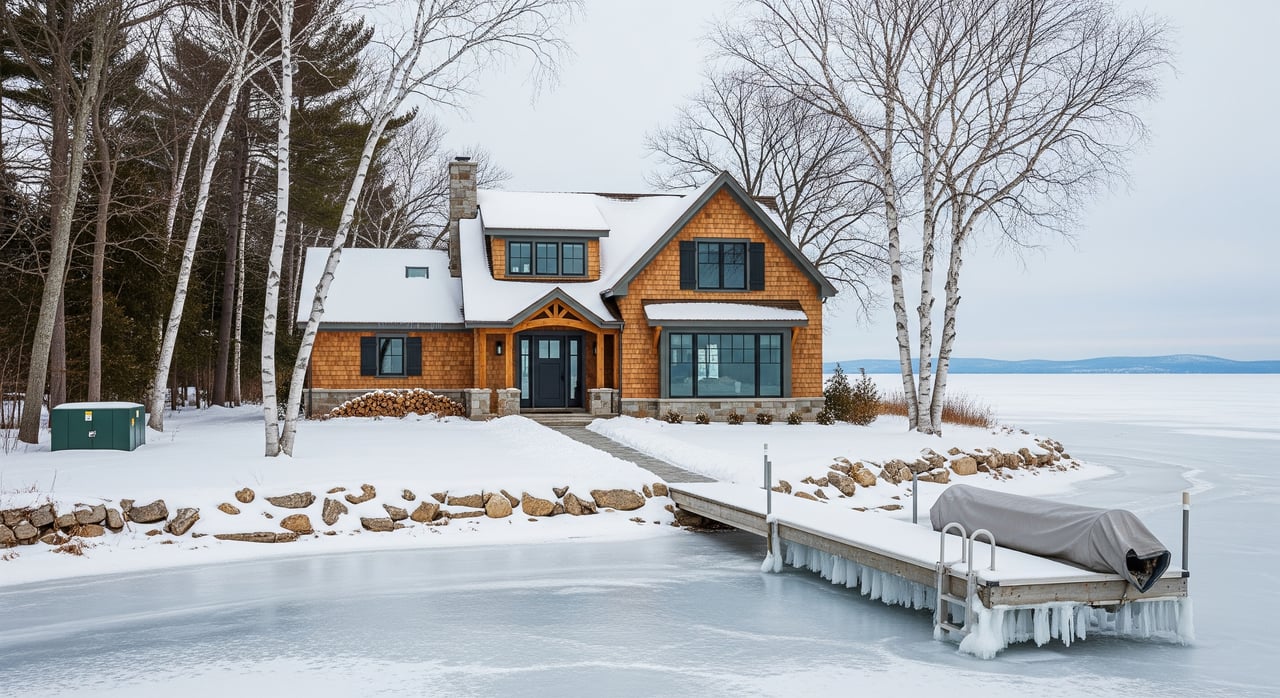
- If a system must stay in: Follow manufacturer instructions and local contractor advice. Lower floating docks to let ice form on top, remove deck panels that can trap ice, and secure hardware so it can tolerate movement.
- Boat lifts: Always remove the boat and covers, drain hydraulic or pneumatic systems, and disconnect power. Some designs allow full removal, which is preferred.
- Power: Have a licensed electrician disconnect and lock out shore power to dock and lift circuits.
- Ice-control devices: Bubblers and ice-eaters can keep water open but come with costs and potential ecological tradeoffs. Use only as recommended and confirm local guidance.
For general best practices, review BoatUS dock and lift winterization tips and shoreline insights from Michigan Sea Grant.
Shoreline protection and erosion
- Vegetation: Maintain native, deep-rooted plants to stabilize banks. Touch up small erosion areas before freeze.
- Structures: Inspect riprap and retaining features for weak spots. Secure loose materials and outdoor furniture before storms.
- Permits: Many shoreline projects require state or local permits. For questions on riprap, fixed structures, or dredging, start with Michigan EGLE shoreline permitting and verify any Glen Arbor Township or Leelanau County requirements.
Structure, roof, and exterior
- Seal and insulate: Protect crawlspaces and exposed plumbing runs. Close or insulate foundation vents.
- Gutters and roof: Clean gutters and check flashing to help prevent ice dams. Hire a pro for roof work or heavy snow removal.
- Outbuildings: Winterize heaters in garages and boathouses, and ensure doors seal to limit drafts over plumbing or stored equipment.
Power, generators, and documentation
- Generators: Test, service, and confirm fuel supply and safe ventilation now, not during an outage. See Ready.gov winter weather and generator safety.
- Photos and records: Document the pre-winter condition of docks, lifts, shoreline, and structures for insurance and spring planning.
Smart monitoring and remote access
Smart devices can turn a second home into a managed asset rather than a worry.
- Water leak and freeze sensors: Place them near water heaters, under sinks, near exposed pipe runs, and by sump pumps.
- Smart shut-off valves: Consider a whole-home system that can shut water off automatically if a leak or freeze is detected.
- Smart thermostat: Set alerts if indoor temps fall below your safe threshold.
- Power monitoring: Track outages and generator status for critical loads.
- Connectivity: Confirm reliable internet or cellular. Consider a cellular backup for sensors.
- Response plan: Decide who gets alerts and who acts. Share access details and permissions with a caretaker or trusted vendor.
DIY vs. hire a pro
- Good DIY candidates: Draining hoses and exterior bibs, basic insulation, gutter cleaning from safe ground, photographing documentation, and installing smart sensors.
- Hire a pro for: Compressed-air plumbing blowouts, well and septic service, furnace or boiler service, electrical disconnects and dock power, dock and lift removal, and roof work. Always confirm insurance and references.
Vendor scheduling and local logistics
- Book early: Dock, marina, plumbing, and HVAC schedules fill fast from September to October. Early bookings secure better dates before the first hard freeze.
- Write it down: Use written contracts that outline scope, timing, storage locations, and liability.
- Keep a property binder: Include shutoff locations, vendor contacts, keys, and emergency procedures. Share access details with your caretaker.
Quick checklist for Glen Arbor owners
- Review the 10-day forecast and long-range trends through the NWS Gaylord office.
- Drain exterior spigots and irrigation. Remove hoses.
- Choose your strategy: full plumbing winterization or minimal heat with monitoring.
- Service the furnace or boiler. Test the generator.
- Schedule dock and lift removal. If staying in, complete manufacturer winter prep and disconnect power.
- Inspect shoreline, riprap, and retaining structures. Plan permitted work with EGLE if needed.
- Install or test leak, freeze, and temperature sensors.
- Document conditions and update your vendor and caretaker plan.
Protecting your Glen Lake home is about timing, simple habits, and choosing the right help. If you would like a trusted local sounding board or referrals to vetted vendors, reach out to Amanda Theodoran. We live and work this lifestyle every day and are happy to help you prep for a stress-free winter.
FAQs
When should Glen Arbor owners pull docks from Glen Lake?
- Plan for removal by October to early November, using the NWS Gaylord forecast to time around hard freezes and fall storms.
Is it better to winterize plumbing or keep the heat on in a seasonal home?
- Both work if done well: fully winterize and shut water off, or keep heat at 50 to 55°F with smart monitoring and periodic checks.
What antifreeze should I use in plumbing traps?
- Use non-toxic RV/plumbing antifreeze made with propylene glycol and follow label directions; never use automotive antifreeze.
Do I need a permit to work on my shoreline or riprap?
- Many shoreline modifications require permits; start with Michigan EGLE shoreline permitting and verify Glen Arbor Township and Leelanau County rules.
Can I leave my dock or lift in the water for winter on Glen Lake?
- Removal is safest; if it must stay, follow manufacturer guidance, secure components, and disconnect power, and consult a local dock contractor.
What smart devices help protect a vacant Glen Arbor home in winter?
- Use leak and freeze sensors, a smart shut-off valve, a smart thermostat with alerts, and reliable connectivity with a caretaker response plan.